

Building INFRA · Open to co-founding — Nigeria

Building technology.Engineering infrastructure.Creating what comes next.

I’m Prosper — a technology founder, software engineer and systems builder. I build things, solve problems and explore what's possible with technology — from the interface all the way down to the server rack.

Roles

Founder · Software Engineer · Technology Architect · Systems & Infrastructure Engineer

Portrait of Prosper Maxwell
Fig. 00 — Prosper MaxwellNigeria

Founder

INFRA & PHILTECHS

Digital identity, technology & security

Building

Four products

INFRA · Phi · MyPA · ClearSig

Working across

Interface → Infra

Software, servers, networks, security

Open to

Founders

Co-founding, scaling, advice

(01)Story
“I am a builder first, an engineer by discipline and an entrepreneur by ambition.”

My journey in technology has never been limited to writing code or building websites. I've always been drawn to the bigger picture: how software works behind the scenes, how systems communicate, and how an idea moves from a simple thought into something people can actually use.

01 — How it started

My interest in technology grew from a desire to understand how digital systems actually work. I didn't want to be limited to using technology — I wanted to understand what made it possible.

Learning frontend development naturally led me into backend engineering, databases, APIs and application architecture. From there, my curiosity extended into servers, Linux environments, networking, deployments and security. I began to appreciate that a working application is only one part of a much larger system.

02 — From writing software to building systems

Working across both software and physical infrastructure shaped me. Beyond building business applications, I managed the environment underneath them: physical servers, internal networks, storage, RAID configurations and Linux.

Building software is one thing. Making sure the systems supporting it are properly configured, accessible, secure and maintained is another. I've since worked across backend, full-stack, DevOps and security, including technical leadership — and I enjoy being part of the decisions behind a product, not just its features.

03 — The founder in me

At some point, building software became more than a technical pursuit. Instead of asking only how something could be developed, I started asking why it needed to exist, who it would serve, and what it would take to make it sustainable.

Having a good idea is only the beginning — execution, consistency and difficult decisions determine whether it becomes something meaningful. I don't believe entrepreneurship and engineering should live in separate worlds. Knowing how to build makes me a better founder; thinking like a founder makes me a better engineer.

(02)Founder & Venture Building
INFRAFounder · Reusable identity

Verify once.
Reuse everywhere.
Control access.

Live on the web · free sandboxinfraidentity.com↗

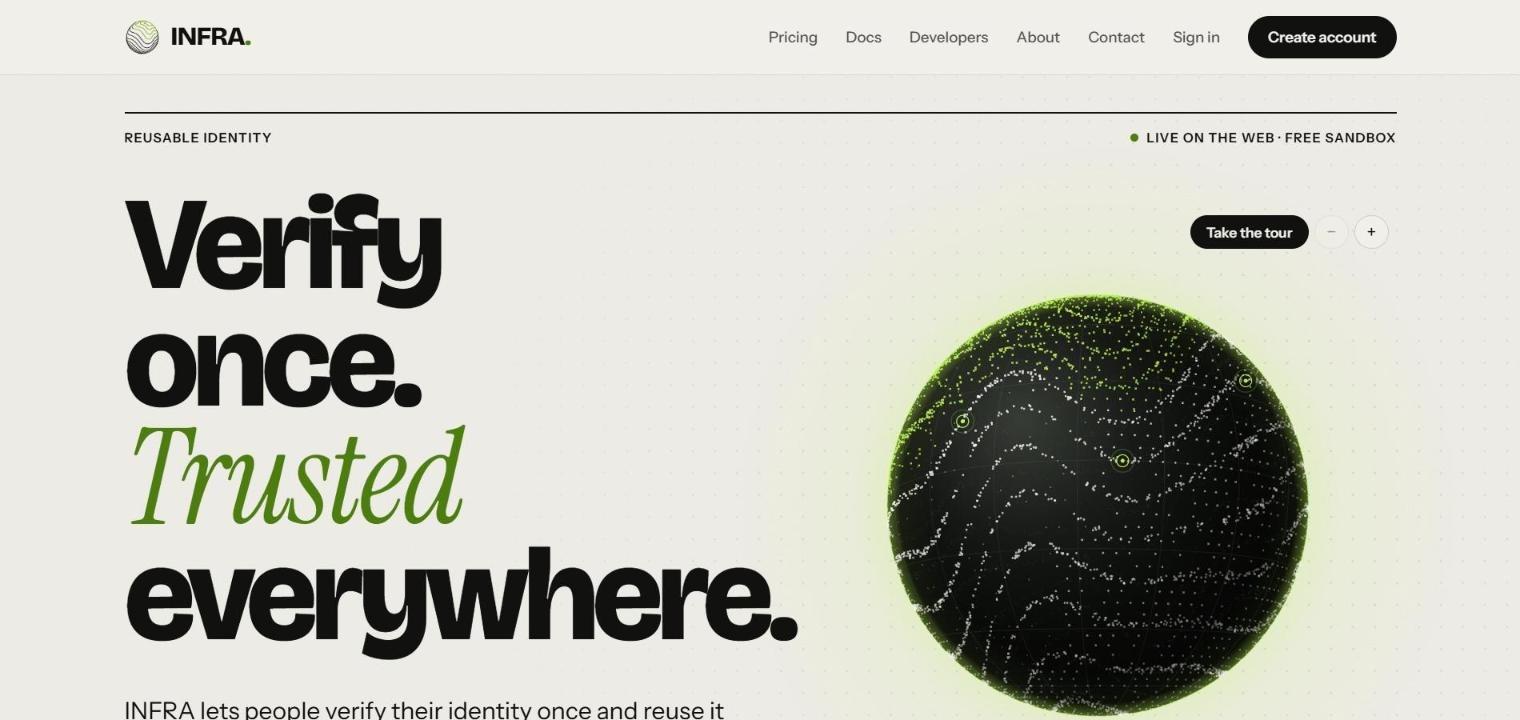
What if people could verify once and reuse that verification anywhere, and applications could request only the specific claims they need? INFRA is the identity layer for that. I founded it and built it — product, architecture, engineering and implementation.

The INFRA mark — a contour globe

Fig. 02a — The INFRA markPrivacy by design

infraidentity.com↗
Screenshot of infraidentity.com
Fig. 02b — infraidentity.comLive preview
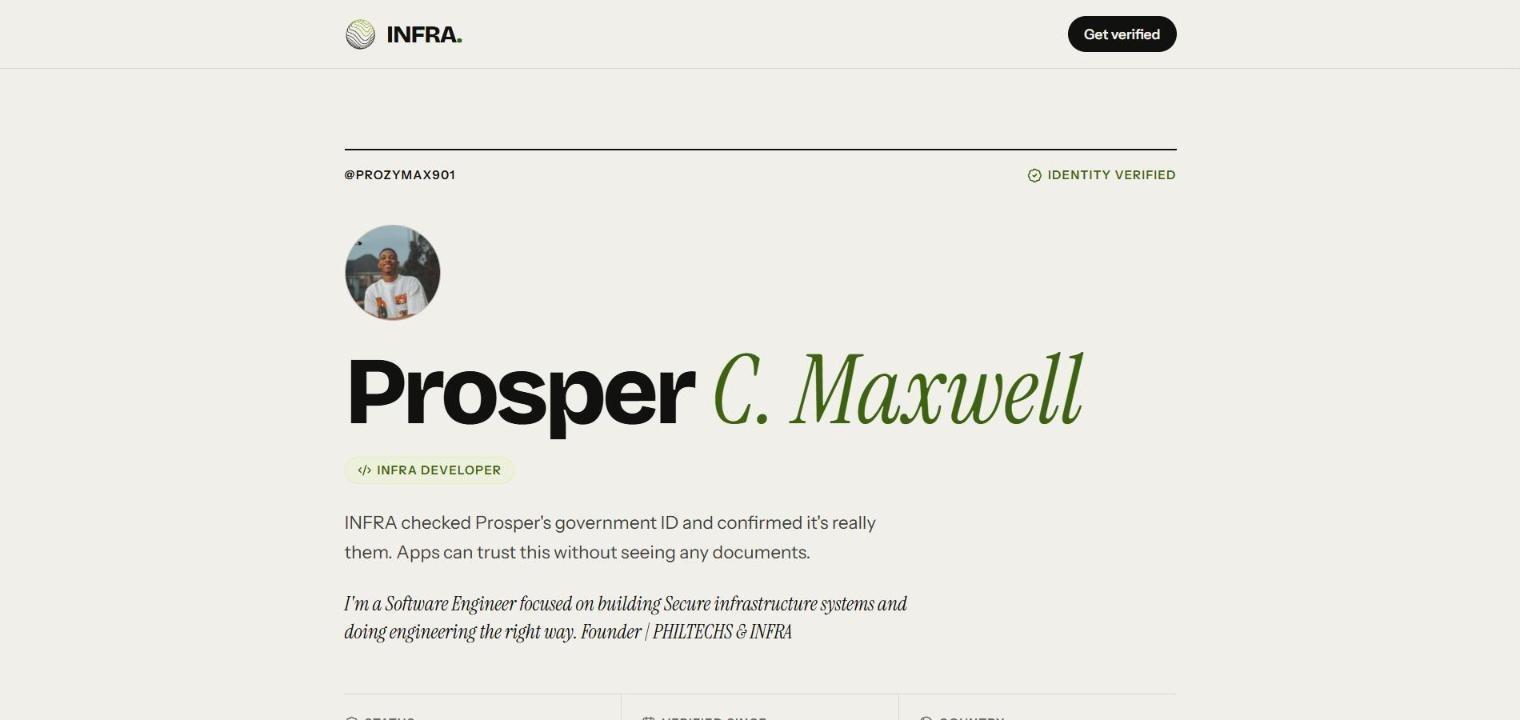
infraidentity.com/@prozymax901↗
Screenshot of infraidentity.com/@prozymax901
Fig. 02c — My verified public identityCaptured Nov 2026

The problem

Everywhere we go online we're asked to prove who we are — submitting documents, repeating verification, handing personal data to service after service with little control over how it's used.

ArchitectureWhat INFRA is made of
01

Identity core

Verification workflows, proof of address, reusable records, verification-based access control.

02

INFRA Connect

“Sign in with INFRA” — OAuth architecture on Ory Hydra, one-time-code connections.

03

Public identity

Shareable handles and profile pages — like mine at infraidentity.com/@prozymax901.

04

PAY-V

Payments around verification: fee collection, payment verification, linked wallets.

05Private review

ZK engine

Prove an attribute — age threshold, verified status, residency — without revealing the data behind it.

Why it matters

INFRA is about building something foundational — not another consumer app, but infrastructure other applications can depend on.

NoteThe ZK engine is built on Google's Longfellow ZK and has been privately tested. It is in private review, not a publicly launched feature.

  • Next.js
  • Node.js
  • PostgreSQL
  • OAuth 2.0
  • Ory Hydra
  • Longfellow ZK
(03)Founder & Venture Building

Founder · Technology & Product Lead

PHILTECHS

Technology.Security.Empowerment.

PHILTECHS started from a belief that technology should be accessible, useful and empowering. I wanted to build something that went beyond software services — something that could contribute to the wider technology ecosystem. I shape its technical direction, build its products and run its digital infrastructure.

philtechs.org ↗
PHILTECHS mark — Technology. Security. Empowerment.
Fig. 03a — The PHILTECHS markBrand identity
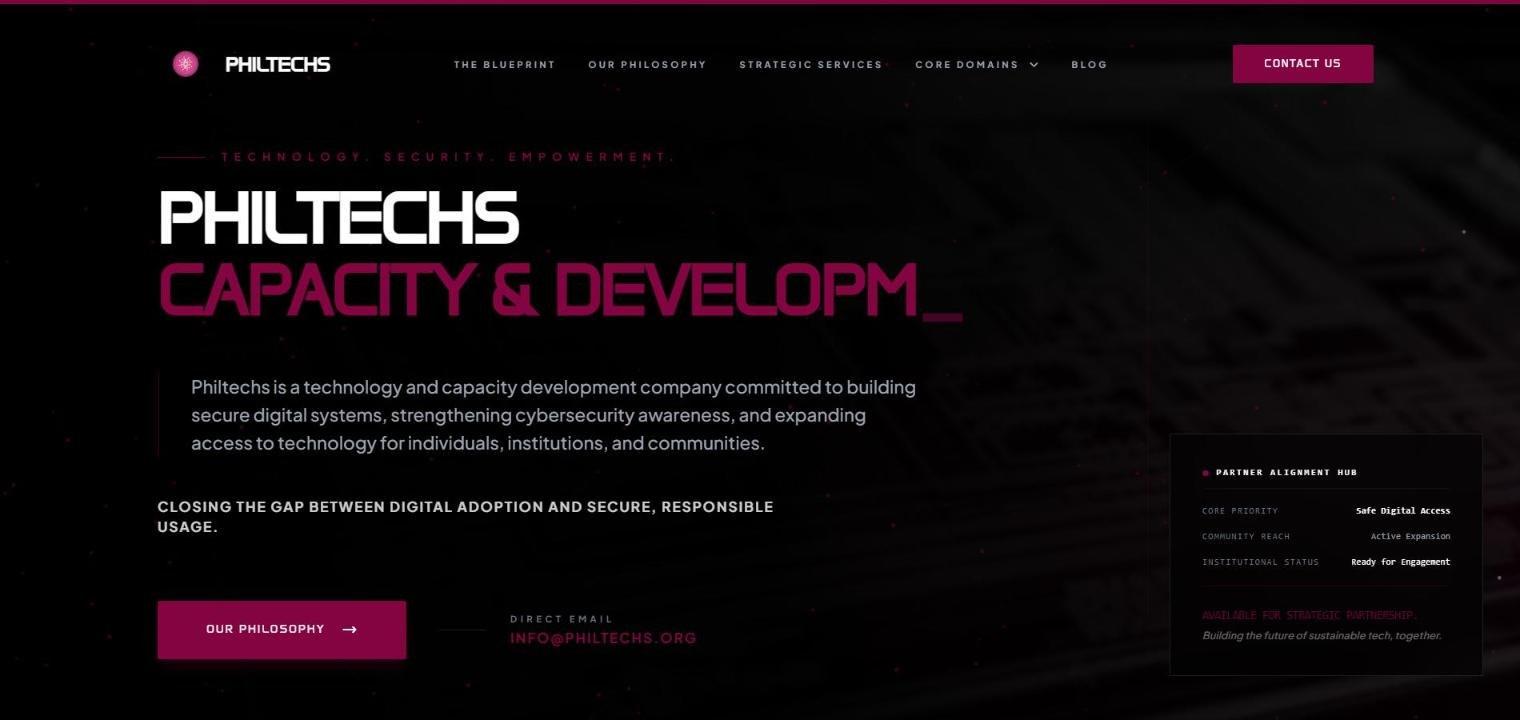
philtechs.org↗
Screenshot of philtechs.org
Fig. 03b — philtechs.orgLive preview

01

Software Engineering

Digital products, business applications and custom software.

02

IT Infrastructure

Networking, server management, deployment and consulting.

03

Cybersecurity

Security-conscious systems, awareness and technology risk.

04

Technology Education

Structured learning and digital skills programmes.

05

Digital Empowerment

Wider access to technology and practical capability.

Initiative 01

PHILTECHS Learn

Practical digital education — programming, graphics design, digital marketing, video editing, virtual assistance and more — so people can take a real part in the digital economy.

learn.philtechs.org ↗

Initiative 02

SIAN— Security In A Nutshell

A cybersecurity awareness initiative helping individuals and communities understand everyday digital threats, protect their identities and build safer habits.

For me, PHILTECHS is a long-term undertaking. I want to see it grow into a meaningful technology institution — one that builds products, delivers infrastructure, develops talent and contributes to the future of technology in Africa.

(04)Products & Technology Ventures

More problems, each worth solving.

Each project is a chance to explore a problem, shape a solution and engineer the systems it needs. They look different on the surface — developer security, applied AI, shared wallets — but they come from the same instinct as INFRA: build the foundations other things can stand on.

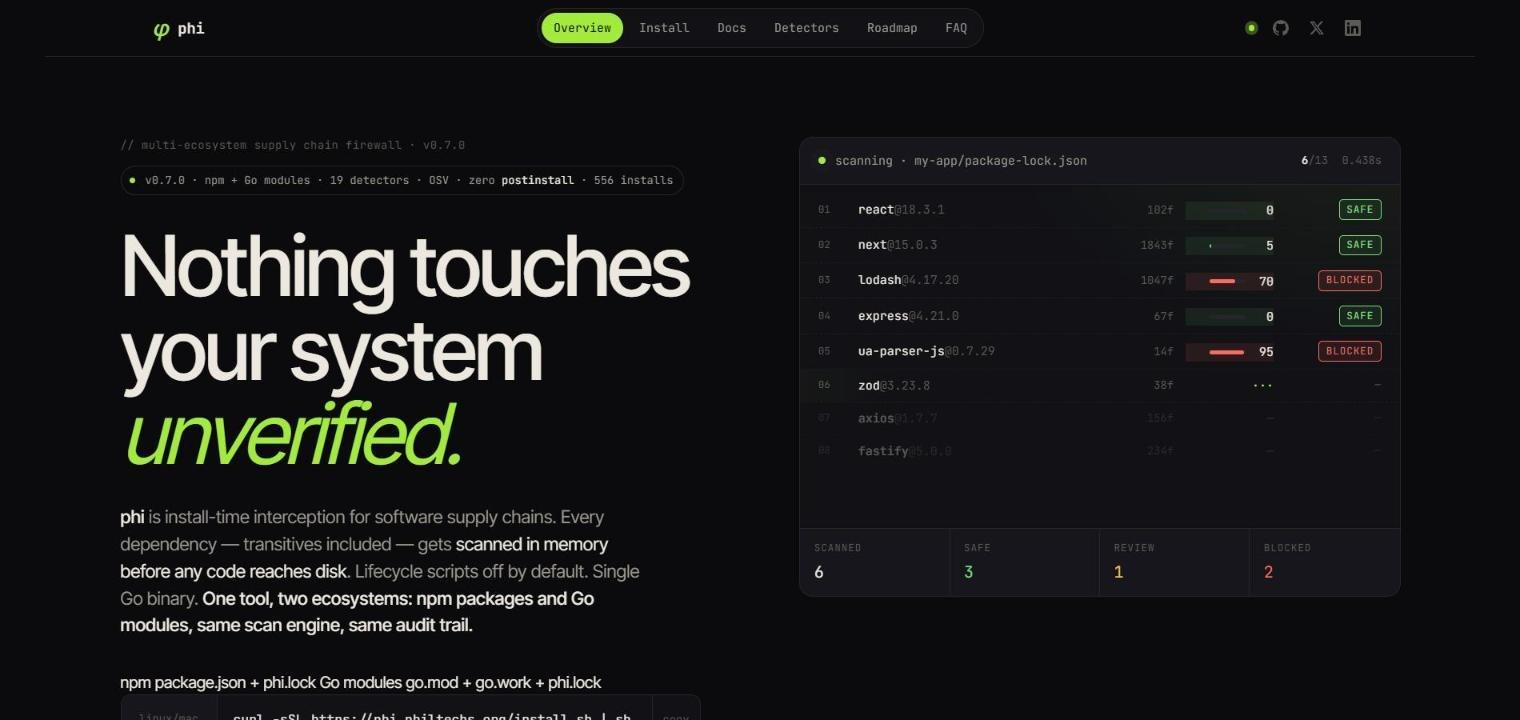
01 / 03Install-time supply-chain firewall

Phi

Nothing touches your system unverified.

v0.7.0 · open source (MIT)

The problem

Every project leans on external packages. They make development faster — and quietly bring vulnerabilities and supply-chain risk into otherwise secure applications.

The approach

Phi intercepts installs. Every dependency, transitives included, is scanned in memory before any code reaches disk, scored for risk, and blocked if it crosses the line — one tool for npm packages and Go modules, with the same scan engine and audit trail.

What it’s made of

19 detectors
Separate mechanisms for spotting risky and malicious packages.
OSV intelligence
Live vulnerability data from the OSV database.
Risk scoring
High-risk packages are blocked before install; thresholds are configurable.
Zero postinstall
Lifecycle scripts are off by default.
Two ecosystems
npm and Go modules, shipped as a single Go binary.

Why it mattersDeveloper security shouldn't begin when an application is deployed. It should start with the tools and components used to build it.

  • / Go
  • / npm
  • / Go modules
  • / OSV
  • / Supply-chain security
phi.philtechs.org↗
Screenshot of phi.philtechs.org
Fig. 01 — phi.philtechs.orgLive preview
~/projects/app — phi

$ phi install express zod lodash colorss

↳ 19 detectors · OSV advisories synced · lifecycle scripts disabled

✓express@4.21.2risk04

✓zod@3.23.8risk06

✓lodash@4.17.21risk09

✗colorss@1.0.3risk78

blocked colorss@1.0.3 — score 78 ≥ threshold 60

· possible typosquat of “colors”

· install script present (not executed)

3 installed · 1 blocked

$ ▍

Inside the productIllustrative
02 / 03AI assistant for small businesses

MyPA

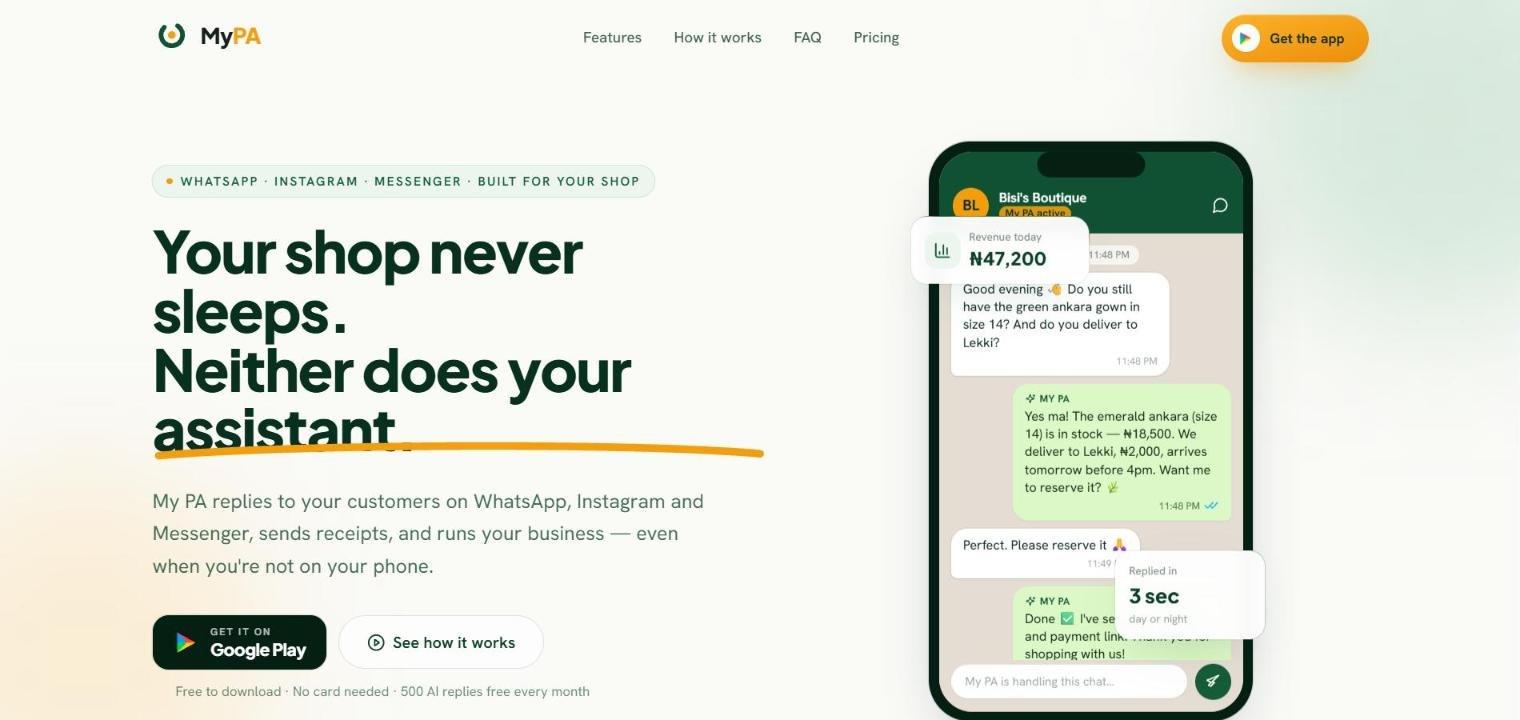
Your shop never sleeps. Neither does your assistant.

In development

The problem

Small businesses already run on WhatsApp, Instagram and Messenger, but keeping up with customer conversations gets hard as they grow — and sophisticated automation tools are out of reach.

The approach

MyPA brings an AI assistant into the places those businesses already work. It replies to customers, sends receipts and handles parts of the workflow, without asking anyone to learn complicated new software.

What it’s made of

Where customers are
WhatsApp, Instagram and Messenger.
Gemini 2.5 Flash
Fast model for customer interaction, with room for other providers.
Paystack
Virtual accounts for payment-related workflows.

Why it mattersNot AI because it's popular — AI because it can solve real operational problems for ordinary businesses.

  • / Node.js
  • / Gemini 2.5 Flash
  • / WhatsApp
  • / Paystack
mypa.ng↗
Screenshot of mypa.ng
Fig. 02 — mypa.ngLive preview
MyPA · Amaka's Fabrics · WhatsApp

Good afternoon, do you still have the Ankara 6-yard in blue?

Good afternoon! Yes — 3 left at ₦18,000 each. Should I reserve one for you?

Yes please, 2

Done ✓ Total ₦36,000. Pay into this account and I'll confirm automatically: Paystack · 90•• ••• 214

Sent!

Payment received. Order #A1042 is confirmed 🎉

Replied by MyPA · Gemini 2.5 Flash

Inside the productIllustrative

03 / 03Shared wallets with readable approvals

ClearSig

Sign intents. Not hex.

Early devnet preview · test funds only

The problem

Shared crypto wallets ask people to approve transactions they can't read — strings of hex, with the real amount, recipient and network buried inside.

The approach

ClearSig turns every request into a plain intent everyone can read before anyone approves, checks it against the group's rules — transfer limits, known destinations — and only then collects the approvals it needs.

What it’s made of

Your intent
Amount, recipient and network stay attached to one readable request.
Your rules
Requests are checked against policy before any approval counts.
Your people
Shared control, with the approvals each request requires.
Products
Personal and Teams, with Recovery (pre-alpha) and Agents (gated).

NoteClearSig is an early preview on Solana devnet, running with test funds only.

Why it mattersControl means nothing without clarity. People should understand exactly what they are signing.

  • / Solana
  • / Multi-approval wallets
  • / Policy engine
clearsig.xyz↗
Screenshot of clearsig.xyz
Fig. 03 — clearsig.xyzCaptured Nov 2026
(05)Enterprise Systems & Infrastructure

There’s an entire world behind the interface.

The infrastructure, databases, authentication, networks and security controls that make everything work. I’ve always wanted to understand — and be able to work across — all of it.

Software Development · IT Infrastructure · Server & Network Administration

Subsea100 Global Limited

Subsea100 introduced me to the operational side of enterprise technology — where software, physical infrastructure, networking and business operations meet. I built and maintained the company's platforms and worked on the infrastructure underneath them, including physical servers deployed in a residential-office environment.

Software & business systems

  • —Full-stack business applications
  • —Customer-facing web platforms
  • —Internal business software
  • —Backend development & maintenance
  • —Digital workflow implementation

Physical infrastructure

  • —Physical server administration
  • —Linux environments
  • —Internal network infrastructure
  • —Storage servers & RAID
  • —Backup & recovery
  • —Troubleshooting & maintenance

Internal operations systems

The organisation's own file management and storage platform — I built both the software layer and the storage environment it runs on.

Building software is one thing. Making sure the systems beneath it are configured, secure and maintained is another.

sw-core
srv-01
srv-02
nas-01
bkp-01
sw-core — Internal networksrv-01 — Ubuntu · applicationssrv-02 — Linux · servicesnas-01 — Storage · RAIDbkp-01 — Backup & recovery
Fig. 05 — Physical layerIllustrative
IndexPlatforms built & contributed to
  1. 01infraidentity.comDigital identity infrastructure
  2. 02philtechs.orgCorporate technology platform
  3. 03learn.philtechs.orgDigital education platform
  4. 04phi.philtechs.orgSupply-chain security tooling
  5. 05mypa.ngAI-powered business assistant
  6. 06subsea100.comCorporate digital platform
(06)Engineering & Technical Capabilities

Not one layer. The whole picture.

Technologies change and tools evolve. What matters is understanding the engineering underneath well enough to choose the right tool for the problem.

01.

Software Engineering

  • Full-stack applications
  • Backend architecture
  • APIs & integrations
  • Database design
  • Authentication & authorization
  • Production maintenance
02.

Infrastructure & DevOps

  • Linux & Ubuntu
  • Physical & virtual servers
  • VPS & cloud
  • Docker & deployment
  • Storage & RAID
  • Backup & recovery
03.

Security & Networks

  • Network administration & defense
  • Application security
  • Secure authentication
  • Access control
  • Dependency security
  • Infrastructure security
04.

Emerging Technology

  • Digital identity
  • Zero-knowledge proofs
  • Privacy-preserving verification
  • OAuth architecture
  • AI integrations
  • Blockchain & Web3

What I build with

Tools for bringing ideas to life — not limits on what I’m willing to explore.

Languages
JavaScript, TypeScript, Python, Go
Frontend
React, Next.js, Tailwind CSS
Backend
Node.js, Express, REST APIs
Data
PostgreSQL, MySQL, Prisma, Sequelize, Drizzle ORM
Infrastructure
Ubuntu, Linux, Docker, Git, VPS, physical servers
Identity
OAuth 2.0, Ory Hydra, verification integrations
Security
OSV, zero-knowledge proofs, AppSec, network defense
(07)How I Approach Building

Building technology takes more than technical knowledge.

It means understanding problems, recognising opportunities and making the right decisions across the whole life of a product.

  1. 01

    Think beyond the application.

    I look at the whole system — interface, backend, database, infrastructure, security and the environment it runs in.

  2. 02

    Build with purpose.

    Every product should address a meaningful problem. Technical complexity alone does not make something valuable.

  3. 03

    Security is an engineering responsibility.

    It should shape the architecture and implementation of a system from the very beginning.

  4. 04

    Own the execution.

    Take an idea from conception to implementation, making the technical and product decisions along the way.

  5. 05

    Design for evolution.

    Leave room for future requirements without adding complexity nobody needs yet.

  6. 06

    Build things that matter.

    Technology that improves digital experiences, strengthens infrastructure and creates opportunity.

(08)Where my curiosity is taking me

I'm interested in where the internet is heading — especially what happens when software systems become capable of acting on their own.

I don't have all the answers, and I don't think anyone should pretend to. But these are the questions I find worth exploring — and building toward.

  • Agentic internet systems
  • Web4
  • Decentralized identity
  • Zero-knowledge cryptography
  • Privacy-preserving tech
  • Distributed systems
  • Secure supply chains
  • AI & automation
  • Cloud infrastructure
  • Digital trust
  1. Q1

    How will they establish identity?

  2. Q2

    How will permissions work?

  3. Q3

    How will applications verify one another?

  4. Q4

    How will people retain control?

  5. Q5

    What infrastructure will make it secure?

(09)For founders

Building something? Let’s build it together.

I know what it takes to turn an idea into a working company, because I'm doing it. If you're building something ambitious, I'd like to help — in whatever shape makes sense for where you are.

01

Co-founding

For the right idea and the right people.

I'm open to joining early as a technical co-founder — owning architecture, engineering, infrastructure and security from day one, and sharing the risk and the ambition.

02

Scaling

For startups that have found something real.

Helping young companies grow past their first version: hardening the stack, building infrastructure that holds, tightening security and setting up engineering to carry more users and a bigger team.

03

Advice

For founders who want a second pair of eyes.

Product and technical direction, architecture reviews, security posture, build-versus-buy, or simply pressure-testing an idea before you commit to it.

What I bring

A founder's perspective
I found and run INFRA and PHILTECHS, so I think about markets, users and survival — not just code.
The whole stack
Interface, backend, data, infrastructure and the server rack underneath.
Security from day one
Identity, authentication and supply-chain security are my home ground.
Products in the wild
INFRA and Phi are live; MyPA and ClearSig are on the way — identity, developer security, applied AI and wallets.

A good fit if

  • You're solving a real problem, not chasing a trend.
  • You want to build something that lasts.
  • You value honest, direct conversations about what will and won't work.
No pitch deck needed.